In complex surgeries, especially cardiovascular and thoracic procedures, coverage is a critical factor in maintaining sterility and protecting both the patient and surgical team. Hospitals often compare CVTS drape kits with general surgical drapes for determine which option offers more effective coverage. While both are disposable and sterile, their design and application lead to significant differences in performance.
Understanding CVTS drape kits
CVTS (Cardiovascular and Thoracic Surgery) drape kits are specially designed for high-risk procedures such as open-heart surgery, CABG, and thoracic operations. These procedures require extensive exposure and strict sterile control.
According to Nivda product data:
- Provide full-body coverage with targeted surgical access
- Include multiple drapes and components designed for chest and thoracic areas
- Made from premium fluid-resistant non-woven material
- Integrated features like fenestrations and fluid collection systems
These kits are engineered to cover not only the patient but also surrounding areas and equipment, ensuring a controlled surgical environment.
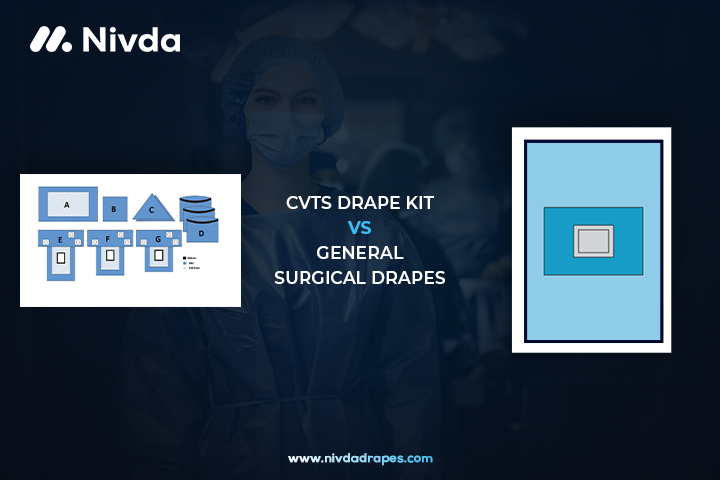
Understanding general surgical drapes
General surgical drapes are designed for a wide range of procedures and provide basic sterile coverage. They are commonly used in routine surgeries where specialized coverage is not required.
As per available data:
- Offer broad but standard coverage for various surgeries
- Made from fluid-resistant materials to prevent contamination
- Include simple or universal fenestrations
- Focus on versatility rather than procedure-specific coverage
While effective for general use, they may not fully meet the demands of complex surgical setups.
Coverage comparison
| Factor | CVTS Drape Kits | General Surgical Drapes |
| Design type | Procedure-specific (cardiac/thoracic) | General-purpose |
| Patient coverage | Full-body, extensive | Standard coverage |
| Surgical field isolation | Highly controlled | Moderate |
| Coverage of surrounding area | Includes equipment and extended zones | Limited |
| Fenestration placement | Precise for chest access | Generic |
| Suitability for complex surgeries | Ideal | Limited |
Why CVTS drape kits provide better coverage
Complete surgical field protection
CVTS kits are designed to cover the entire patient along with adjacent areas such as instrument zones and operating surfaces. This reduces exposure and maintains a highly controlled sterile environment.
Procedure-specific layout
The drapes are tailored for chest and thoracic access, ensuring that only the required surgical site is exposed while the rest of the body remains fully protected.
Enhanced infection control
Full coverage combined with fluid-resistant materials minimizes contamination risks during long and complex procedures.
Integrated system approach
Since CVTS kits include multiple coordinated components, they provide seamless coverage without gaps, unlike individual or general drapes.
Limitations of general surgical drapes in coverage
General surgical drapes are suitable for routine procedures but may:
- Leave certain areas less protected
- Require additional drapes for full coverage
- Depend on manual arrangement for proper positioning
This can lead to gaps in coverage, especially in complex surgeries.
Conclusion
When comparing coverage, CVTS drape kits clearly provide superior performance over general surgical drapes. Their procedure-specific design, full-body coverage, and integrated components make them ideal for complex cardiovascular and thoracic surgeries.
General surgical drapes remain effective for routine procedures, but for surgeries requiring extensive coverage and strict sterile control, Nivda CVTS drape kits offer a more reliable and comprehensive solution.
Get Connected:
+91 76007 27950 | exports@nivdadrapes.com | www.nivdadrapes.com