In interventional cardiology procedures, efficiency depends on setup time, workflow organization, and ease of handling during procedures like angiography and angioplasty. Hospitals often compare angiography drapes with cardiology drape kits for determine which option improves procedural efficiency. While both are disposable and sterile, their design and usage significantly impact overall performance.
Understanding angiography drapes
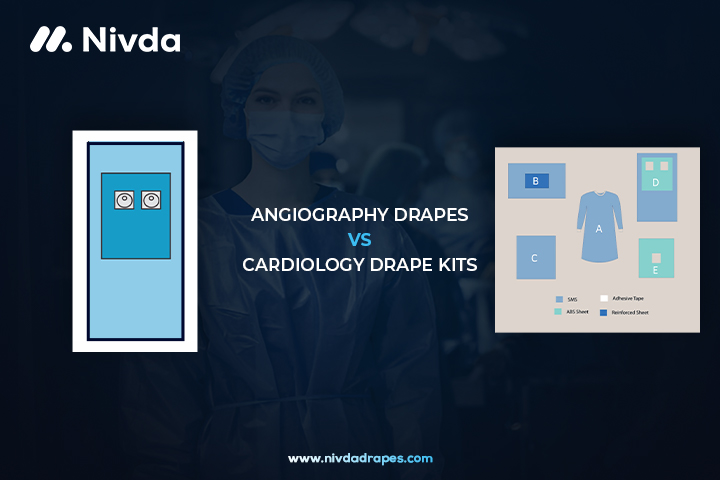
Angiography drapes are single, procedure-specific drapes used mainly in catheterization and imaging procedures. They are designed to cover the patient and provide access to the insertion site.
Key features include:
- Fenestration aligned with catheter entry points
- Adhesive backing for stable placement
- Absorbent and fluid-resistant material
- Lightweight and easy to apply
These drapes are effective for maintaining a sterile field and allowing quick setup, especially in straightforward procedures.
Understanding cardiology drape kits
Cardiology drape kits (including angiography or angioplasty kits) are complete, pre-packed solutions designed for interventional cardiac procedures.
According to Nivda product data:
- Include multiple components such as gowns, towels, trolley covers, and specialized drapes
- Provide full patient coverage with targeted access areas
- Designed for catheterization labs and complex interventions
- Pre-arranged for faster and more organized setup
These kits are built to support the entire procedure rather than just covering the patient.
Efficiency comparison
| Factor | Angiography Drapes | Cardiology Drape Kits |
| Design type | Single drape | Complete kit solution |
| Setup time | Fast (single placement) | Faster overall (pre-packed system) |
| Components included | Limited | Multiple integrated components |
| Workflow organization | Basic | Highly organized |
| Staff handling | More manual arrangement | Minimal handling required |
| Suitability for complex procedures | Moderate | High |
Why cardiology drape kits are more efficient
Pre-packed convenience
All required components are included in one sterile pack, eliminating the need to gather multiple items separately. This reduces preparation time and simplifies workflow.
Better procedural organization
With predefined arrangement of drapes, gowns, and accessories, the surgical team can follow a structured setup, reducing confusion and delays.
Reduced handling and errors
Since everything is standardized, there is less manual handling, which minimizes the risk of missing components or incorrect setup.
Improved performance in complex procedures
Cardiology procedures often involve multiple steps and instruments. Kits are designed to support these complexities, ensuring smoother operations.
Where angiography drapes are efficient
Angiography drapes are useful in:
- Short or routine diagnostic procedures
- Situations requiring quick draping
- Settings where minimal components are needed
They provide simplicity and speed but may require additional items to complete the setup.
Conclusion
When comparing efficiency, cardiology drape kits offer a clear advantage over angiography drapes. Their pre-packed design, integrated components, and structured workflow significantly reduce preparation time and improve procedural efficiency.
Angiography drapes remain effective for basic and quick procedures, but for complex interventional cardiology workflows, Nivda cardiology drape kits provide a more organized, reliable, and time-saving solution.
Get Connected:
+91 76007 27950 | exports@nivdadrapes.com | www.nivdadrapes.com