In surgical practice, drapes play a vital role in maintaining sterility and controlling fluids. However, not all drapes are designed the same. C-section drapes and standard surgical drapes differ significantly in terms of design, features, and purpose. Understanding these differences helps hospitals choose the right solution based on procedure requirements.
Understanding C-section drapes
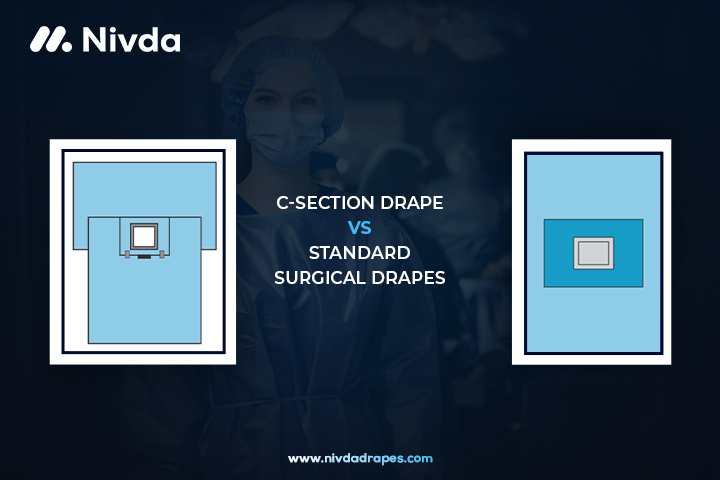
C-section drapes are specifically designed for cesarean delivery procedures. These drapes are developed to manage both surgical needs and obstetric requirements, including fluid control and patient interaction.
Typical features include:
- Integrated fluid collection pouch to manage large volumes of fluids
- Incise film for secure adhesion to the surgical site
- Specialized fenestration positioned for abdominal delivery
- Additional components like anesthesia screens or panels for controlled access
- Advanced designs allowing mother-baby interaction without breaking sterility
These drapes are engineered to support both surgical efficiency and patient safety during delivery procedures.
Understanding standard surgical drapes
Standard surgical drapes are general-purpose sterile sheets used across a wide range of surgeries. Their primary function is to create a sterile field and prevent contamination.
Key characteristics include:
- Basic sterile barrier to prevent infection spread
- Fluid-resistant materials to reduce strike-through
- Simple design without procedure-specific enhancements
- Flexibility for use in multiple surgical specialties
They are widely used in routine procedures where specialized features are not required.
Key differences
| Factor | C-Section Drapes | Standard Surgical Drapes |
| Design type | Procedure-specific | General-purpose |
| Surgical application | Cesarean delivery | Multiple surgeries |
| Fluid management | Advanced with pouch and drainage | Basic fluid resistance |
| Fenestration | Precisely positioned for delivery | Generic or adjustable |
| Additional features | Incise film, anesthesia panel, interaction window | Minimal |
| Workflow efficiency | High for obstetric procedures | Moderate |
Why C-section drapes are different
Procedure-specific functionality
C-section drapes are tailored for a very specific surgery. Features like incise films and pre-positioned openings reduce setup time and improve surgical accuracy.
Enhanced fluid control
Cesarean procedures involve significant fluid exposure. Integrated pouches and drainage systems help maintain a clean and dry surgical field.
Improved patient experience
Modern C-section drapes may include transparent panels or openings that allow early mother-baby contact without compromising sterility.
Organized surgical environment
Additional elements like tube holders and structured layouts help keep the operating area organized and efficient.
Limitations of standard surgical drapes in C-section
Standard drapes can provide sterility but lack:
- Dedicated fluid collection systems
- Procedure-specific access points
- Features that support obstetric workflow
This can lead to increased adjustments and less efficient fluid handling during cesarean procedures.
Conclusion
C-section drapes and standard surgical drapes serve the same fundamental purpose of maintaining sterility, but their effectiveness depends on the procedure. C-section drapes are specifically engineered for cesarean delivery, offering better fluid management, precise access, and improved workflow.
Standard surgical drapes remain suitable for general surgeries, but for obstetric procedures, hospitals prefer specialized C-section drapes from Nivda to ensure better performance, safety, and efficiency in the operating room.
Get Connected:
+91 76007 27950 | exports@nivdadrapes.com | www.nivdadrapes.com