In modern operating theatres, efficiency is directly linked to preparation time, workflow organization, and error reduction. Hospitals often evaluate general drape kits and customized drape kits for determine which option improves overall OT performance. While both are disposable and sterile, their impact on efficiency varies significantly.
Understanding general drape kits
General drape kits are designed for multi-purpose use across various surgical procedures. They provide standard components that can be adapted based on the type of surgery.
According to Nivda product data:
- Include basic drapes, gowns, and accessories
- Suitable for a wide range of procedures
- Offer flexibility in usage
- Require manual arrangement and adjustment during setup
These kits are useful in routine surgeries but may not be optimized for specific procedural needs.
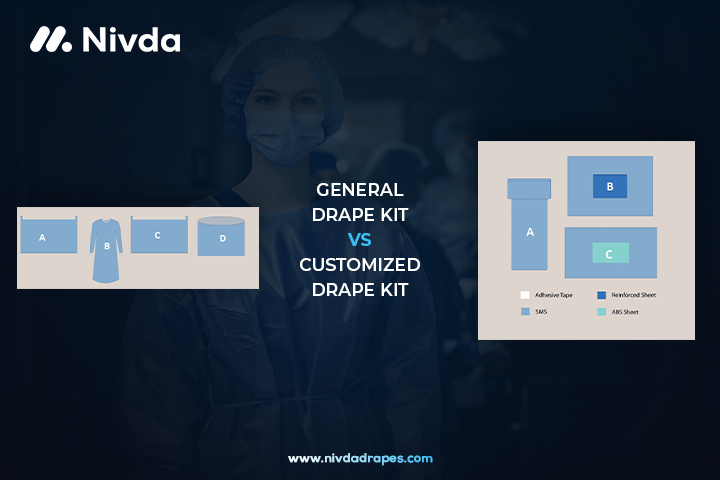
Understanding customized drape kits
Customized drape kits are procedure-specific kits designed according to the exact requirements of a particular surgery. Each component is pre-selected and arranged to match the workflow of that procedure.
From the Nivda catalogue:
- Include all required disposables in one pack
- Designed with precise fenestrations and reinforcements
- Pre-configured for specific surgeries (orthopedic, urology, cardiology, etc.)
- Minimize the need for additional components or adjustments
These kits are developed to streamline the entire surgical process.
Efficiency comparison
| Factor | General Drape Kit | Customized Drape Kit |
| Design approach | Multi-purpose | Procedure-specific |
| Setup time | Moderate | Faster |
| Workflow organization | Basic | Highly organized |
| Staff involvement | Higher | Reduced |
| Risk of missing items | Moderate | Very low |
| Error rate | Higher | Lower |
| OT efficiency | Moderate | High |
Why customized drape kits improve OT efficiency
Reduced preparation time
Customized kits come pre-packed with all necessary components arranged according to the procedure. This eliminates the need to collect and organize multiple items separately.
Standardized workflow
Each surgery follows a consistent setup pattern, which reduces variability and improves coordination among the surgical team.
Minimal handling
Fewer handling steps mean faster setup and reduced chances of contamination or errors.
Lower risk of delays
Since all required items are included in one kit, the chances of missing components or interruptions during surgery are significantly reduced.
Faster turnaround time
Quick setup and disposal help reduce the time between surgeries, allowing hospitals to perform more procedures efficiently.
Limitations of general drape kits in efficiency
General drape kits are versatile but may:
- Require additional components for specialized procedures
- Increase dependency on staff for arrangement
- Lead to longer setup times
- Introduce variability in workflow
These factors can impact overall OT efficiency, especially in high-volume surgical settings.
Conclusion
When comparing OT efficiency, customized drape kits provide a clear advantage over general drape kits. Their procedure-specific design, pre-arranged components, and reduced handling significantly improve workflow, minimize errors, and save time.
General drape kits remain suitable for routine and flexible use, but for hospitals aiming to optimize efficiency and standardize operations, Nivda customized drape kits offer a more effective and reliable solution for modern surgical environments.
Get Connected:
+91 76007 27950 | exports@nivdadrapes.com | www.nivdadrapes.com