In urology, draping plays a crucial role in maintaining sterility, controlling fluids, and supporting surgical precision. Two commonly used disposable drapes are URS (Ureteroscopy) drapes and TURP (Transurethral Resection of the Prostate) drapes. While both are designed for urological procedures, their effectiveness varies depending on the type of surgery-especially when it comes to minimally invasive techniques.
Understanding URS Drapes
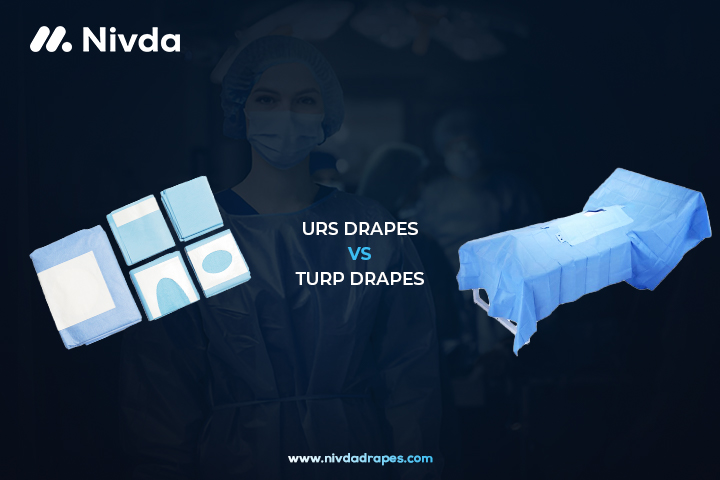
URS drapes are specifically designed for ureteroscopy procedures, which are minimally invasive and involve accessing the ureter using flexible or rigid scopes.
According to Nivda product insights, URS drapes provide:
- Targeted coverage for lower abdominal and perineal areas
- Adhesive edges for secure placement
- Integrated fluid collection systems for controlled irrigation
- Compact and flexible design for minimally invasive access
These drapes are optimized for precision and mobility, making them ideal for procedures where surgeons require flexibility and minimal obstruction.
Understanding TURP Drapes
TURP drapes are designed for prostate resection procedures, which involve continuous irrigation and higher fluid output.
Typical features include:
- Large coverage area including abdomen and legs
- Attached leggings for full protection
- Large fluid collection pouch and drainage system
- Reinforced and absorbent zones for heavy fluid management
These drapes are built to handle longer procedures with significant fluid exposure, ensuring a clean and controlled surgical field.
Product Comparison Overview
| Factor | URS Drapes | TURP Drapes |
| Procedure type | Ureteroscopy (minimally invasive) | Prostate resection |
| Design focus | Compact and flexible | Large and comprehensive |
| Fluid management | Moderate | High (heavy irrigation) |
| Coverage area | Targeted | Full lower body with leggings |
| Ease of handling | High | Moderate |
| Setup time | Faster | Slightly longer |
| Best use case | Minimally invasive procedures | High-fluid, longer surgeries |
Which is More Effective?
For minimally invasive urology procedures, URS drapes are more effective. Their compact design, ease of handling, and targeted coverage allow surgeons to work efficiently without unnecessary bulk. They also reduce setup time and improve workflow in shorter procedures.
On the other hand, TURP drapes are more effective for high-fluid and longer-duration surgeries. Their advanced fluid collection systems and extensive coverage make them essential for procedures like prostate resection, where fluid management is critical.
Workflow and Infection Control Perspective
URS drapes support faster OT turnover and reduced handling due to their simpler design. TURP drapes, while slightly more complex, provide superior fluid control and contamination prevention in demanding procedures. Both, being disposable, ensure single-use sterility and reduce infection risks.
Conclusion
URS and TURP drapes serve different purposes within urology. For minimally invasive procedures like ureteroscopy, URS drapes offer better efficiency, flexibility, and ease of use. For more complex procedures involving heavy fluid management, TURP drapes remain the preferred choice.
With a wide range of disposable urology drapes, Nivda ensures that healthcare providers can select the most effective solution based on procedure type, improving both surgical outcomes and operational efficiency.
Get Connected:
+91 76007 27950 | exports@nivdadrapes.com | www.nivdadrapes.com