In interventional cardiology procedures such as angioplasty, maintaining a controlled sterile environment and ensuring procedural safety are essential. Hospitals often compare angioplasty drape kits with standard surgical drapes for determine which option provides better safety outcomes. While both are disposable and designed for sterility, their effectiveness differs significantly in real clinical settings.
Understanding angioplasty drape kits
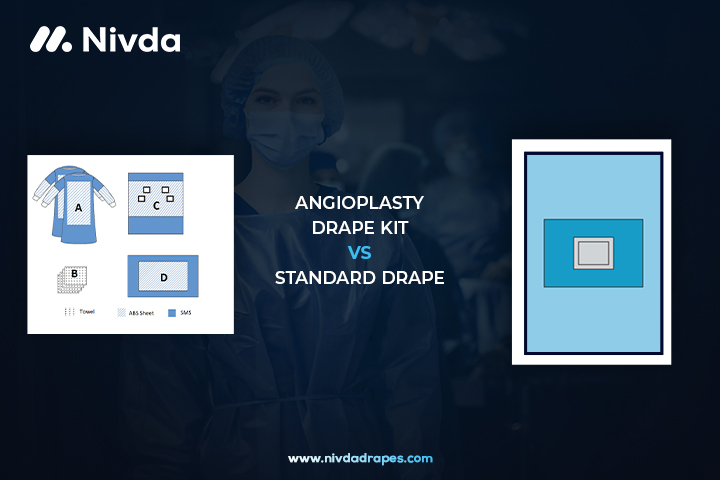
Angioplasty drape kits are specifically designed for catheter-based cardiac procedures. These kits are structured to support both femoral and radial access while ensuring proper fluid control and sterile management.
Based on Nivda product specifications:
- Designed with dual access points (femoral and radial apertures)
- Adhesive areas for secure fixation
- Integrated fluid control features
- Complete kit including supporting components for procedure setup
These features help maintain a stable and controlled surgical environment, which is critical for patient safety.
Understanding standard drapes
Standard surgical drapes are general-purpose sterile sheets used across various procedures. They are designed to provide a barrier against contamination but are not tailored for specific interventions like angioplasty.
Typical characteristics include:
- Basic sterile coverage
- Fluid-resistant material
- Generic or adjustable fenestration
- Flexibility for multiple uses
While they support infection control, they lack specialized features required for complex procedures.
Safety comparison
| Factor | Angioplasty Drape Kit | Standard Drapes |
| Design type | Procedure-specific | General-purpose |
| Access control | Precise (dual access apertures) | Generic |
| Stability | High (adhesive fixation) | Moderate |
| Fluid management | Integrated and controlled | Basic |
| Risk of contamination | Low | Higher |
| Workflow safety | Structured and consistent | Variable |
Why angioplasty drape kits improve procedure safety
Procedure-specific design
Angioplasty kits are developed to match the exact requirements of catheter-based procedures. Pre-defined access points reduce the need for adjustments, which helps maintain sterility.
Secure placement
Adhesive areas keep the drape fixed throughout the procedure, preventing displacement that could expose non-sterile areas.
Better fluid control
Integrated features help manage fluids effectively, reducing pooling and contamination risks.
Reduced handling and errors
Since all required components are included in a single kit, there is less manual handling, which lowers the chance of setup errors.
Improved workflow consistency
Standardized kits ensure that every procedure follows the same setup protocol, enhancing overall safety.
Limitations of standard drapes in angioplasty
Standard drapes can provide basic sterile coverage but may:
- Require manual adjustment for access points
- Lack proper fluid control systems
- Increase dependency on staff handling
- Introduce variability in setup
These factors can impact both efficiency and safety in sensitive procedures.
Conclusion
When comparing procedure safety, angioplasty drape kits offer a clear advantage over standard drapes. Their procedure-specific design, secure fixation, and integrated fluid management contribute to a more controlled and safer surgical environment.
Standard drapes remain suitable for general procedures, but for interventional cardiology, Nivda angioplasty drape kits provide a more reliable solution for improving safety, reducing risks, and ensuring consistent surgical performance.
Get Connected:
+91 76007 27950 | exports@nivdadrapes.com | www.nivdadrapes.com