In modern operating rooms, surgical workflow is directly linked to preparation time, efficiency, and error reduction. Hospitals often compare orthopedic drape kits with general drape kits for determine which option supports smoother procedures. While both are disposable and sterile, their impact on workflow differs significantly depending on the type of surgery.
Understanding orthopedic drape kits
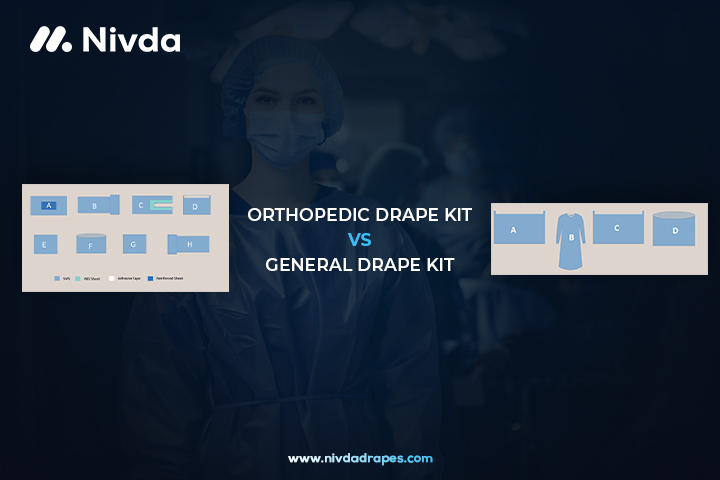
Orthopedic drape kits are designed specifically for procedures such as joint replacement, fracture fixation, and arthroscopy. These kits are tailored to handle complex surgical requirements, including heavy instrumentation and high fluid usage.
According to Nivda product data, orthopedic kits like arthroscopy or joint replacement kits include:
- Procedure-specific fenestrations for accurate access
- Reinforced absorbent areas for high fluid control
- Integrated fluid collection pouches
- Pre-arranged components for joint surgeries
These kits are developed to match the exact needs of orthopedic procedures, which helps reduce intraoperative adjustments and delays.
Understanding general drape kits
General drape kits are designed for multi-purpose use across various surgical procedures. They provide basic sterile coverage and are widely used in routine operations.
As per Nivda catalogue details, general drape kits offer:
- Standard sterile drapes with fluid resistance
- Versatility for different surgical applications
- Easy-to-use and ready-to-open packaging
- Reduced setup time compared to loose drapes
However, they are not customized for specific procedures, which can affect workflow in complex surgeries.
Workflow comparison
| Factor | Orthopedic Drape Kits | General Drape Kits |
| Design approach | Procedure-specific | Multi-purpose |
| Setup time | Faster (pre-arranged for surgery) | Moderate |
| Surgical access | Precise and predefined | Requires adjustment |
| Fluid management | High (reinforced + pouches) | Basic to moderate |
| Staff effort | Minimal | More handling required |
| Workflow efficiency | High | Moderate |
Why orthopedic drape kits improve workflow
Reduced preparation time
Orthopedic kits come pre-packed with all required components arranged according to the procedure. This eliminates the need for selecting and arranging multiple drapes separately.
Procedure-specific efficiency
With pre-designed fenestrations and reinforcement areas, the surgical team does not need to modify drapes during the operation. This reduces interruptions and maintains focus.
Better fluid control
Orthopedic surgeries often involve heavy irrigation. Integrated fluid collection systems help maintain a dry field, preventing delays caused by fluid accumulation.
Fewer errors and adjustments
Because everything is standardized and pre-configured, the chances of incorrect draping or missing components are significantly reduced.
Limitations of general drape kits in workflow
General drape kits are efficient for routine procedures but may require:
- Additional positioning and adjustments
- Extra components for complex surgeries
- More staff involvement during setup
This can slightly increase preparation time and affect workflow consistency in specialized procedures.
Conclusion
When comparing workflow efficiency, orthopedic drape kits provide a clear advantage over general drape kits. Their procedure-specific design, integrated components, and enhanced fluid management help reduce preparation time, minimize errors, and improve overall surgical efficiency.
General drape kits remain a reliable and cost-effective option for routine surgeries, but for complex orthopedic procedures, Nivda orthopedic drape kits offer a more streamlined and effective solution for operating room workflow.
Get Connected:
+91 76007 27950 | exports@nivdadrapes.com | www.nivdadrapes.com