In orthopedic surgeries, especially total knee replacement (TKR), fluid management is critical for maintaining a clear surgical field, reducing contamination, and improving surgical efficiency. Hospitals often compare TKR drape kits with standard orthopedic drapes for understand which option performs better in handling fluids during procedures.
Understanding TKR drape kits
TKR drape kits are specifically designed for knee replacement surgeries where continuous irrigation and blood flow are common. These kits are pre-packed and include multiple components that work together for effective fluid control.
According to product data:
- Integrated fluid collection pouches help capture irrigation fluids
- Reinforced absorbent zones prevent fluid spread
- Fluid-repellent non-woven material avoids strike-through
- Complete coverage ensures controlled drainage and containment
These features are designed to maintain a dry and organized surgical field throughout the procedure.
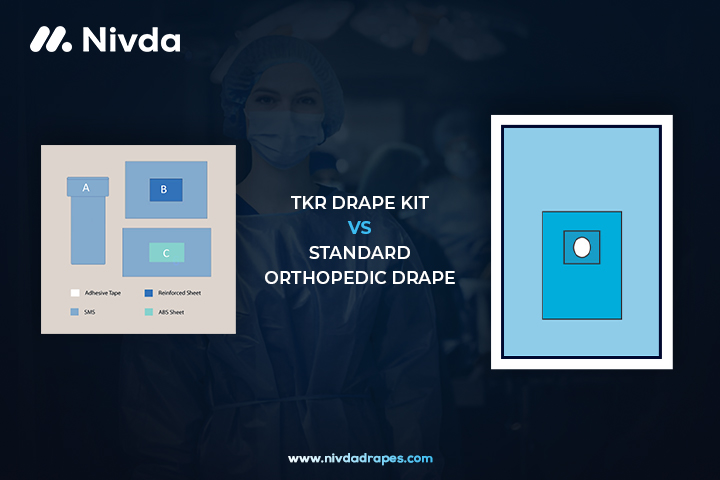
Understanding standard orthopedic drapes
Standard orthopedic drapes are used across various orthopedic procedures and are not limited to a single surgery type. They provide good barrier protection and moderate fluid resistance.
As per available data:
- Made from multi-layer fluid-resistant materials
- May include reinforcement areas for absorbency
- Some advanced drapes include pouches, but not always procedure-specific
- Designed for versatility rather than high-fluid control
While effective in general use, they may not fully meet the demands of high-fluid procedures like TKR.
Fluid management comparison
| Factor | TKR Drape Kit | Standard Orthopedic Drapes |
| Design purpose | Procedure-specific (knee replacement) | Multi-procedure use |
| Fluid collection system | Integrated pouch with drainage | Optional or limited |
| Absorbency level | High (reinforced zones) | Moderate |
| Fluid containment | Excellent | Moderate |
| Risk of fluid pooling | Very low | Higher |
| Suitability for heavy irrigation | Ideal | Limited |
Why TKR drape kits provide better fluid management
Integrated fluid control system
TKR drape kits include built-in pouches and drainage systems that actively collect and direct fluids away from the surgical site. This reduces pooling and keeps the area clean.
High absorbency and reinforcement
Reinforced zones are placed strategically to handle large volumes of fluid, preventing leakage and maintaining dryness.
Procedure-specific design
Unlike standard drapes, TKR kits are designed specifically for knee surgeries, ensuring that fluid control features are aligned with the procedure requirements.
Improved surgical visibility and efficiency
Better fluid management leads to a clearer surgical field, allowing surgeons to work with greater precision and fewer interruptions.
Limitations of standard orthopedic drapes
Standard orthopedic drapes provide good protection but may lack:
- Dedicated fluid drainage systems
- High-capacity fluid collection
- Procedure-specific placement of absorbent areas
This can lead to fluid accumulation, requiring additional management during surgery.
Conclusion
When comparing fluid management, TKR drape kits offer a clear advantage over standard orthopedic drapes. Their integrated fluid collection systems, higher absorbency, and procedure-specific design make them more effective in handling the demands of knee replacement surgeries.
Standard orthopedic drapes remain useful for general procedures, but for surgeries involving heavy fluid usage, Nivda TKR drape kits provide a more controlled, efficient, and reliable solution for maintaining a dry and sterile surgical environment.
Get Connected:
+91 76007 27950 | exports@nivdadrapes.com | www.nivdadrapes.com